



False memories throughout childhood
Designed by rawpixel.com / Freepik
Our studies aim at examining the effect of the development of working memory (WM) maintenance mechanisms and long-term memory (LTM) during childhood on the formation of false memories (FM).
Expected results
WM maintenance mechanisms develop with age (Camos, & Barrouillet, 2018). Past studies have shown that they are effective from the age of 7 (Oftinger & Camos, 2016 ; 2018). Studies revealed that an efficient use of these mechanisms prevents short-term false memories in young adults (Abadie & Camos, 2019). Therefore, 7 y.o are expected to have fewer FM in short-term memory tasks when they can use WM maintenance mechanisms relative to a condition in which they cannot use these mechanisms. In contrast, since children under 5 y.o do not use WM maintenance mechanisms spontaneously, their FM rate should not be affected by the availability of these mechanisms.
Moreover, previous studies have shown that FM increase in long-term memory tasks due to the development of semantic memory in children (Brainerd, Reyna & Forrest, 2002 ; Brainerd, Reyna & Zember, 2011). Our studies are the first to examine interactions between the development of WM maintenance mechanisms and semantic memory on false memories at long-term. Results in young adults (Abadie & Camos, 2019) suggest that the use of attention to maintain information in WM favors the occurrence of long-term FM. Therefore, we expect to observe more FM at long-term in children older than 7 y.o when they can use WM maintenance mechanisms, compared to younger children.
Protocol and ethics
Children between the ages of 4 and 9 y.o will be offered short-period activities involving WM and LTM. These playful activities will be presented on a computer. They can be compared to classroom activities. For a same study, they will be similar between children of different ages. Only the number of items to be processed will vary in order to adjust the difficulty level to the different age groups. A set of pictures or spoken words will be presented to the children. Each set will contain items related to each other and to a theme known to the children (e.g. the circus, the farm …). The material used will not generate negative emotions. The images will mostly come from databases created by experimental psychologists. Children will have to learn the presented items in order to remember them a few seconds later. This type of tasks will be used in in the different studies. Instructions, presence or absence of a concurrent task, semantic relationship between items, the way the items are presented, and retention time will vary across studies. The concurrent task will also vary to either prevent or allow the use of WM maintenance mechanisms in different ways (e.g. identifying the color of smileys on the screen, repeating a syllable…). The use of WM maintenance mechanisms and access to semantic information in LTM will be favored in some tasks and be prevented in others. Figure 1 illustrates the type of task we will use.
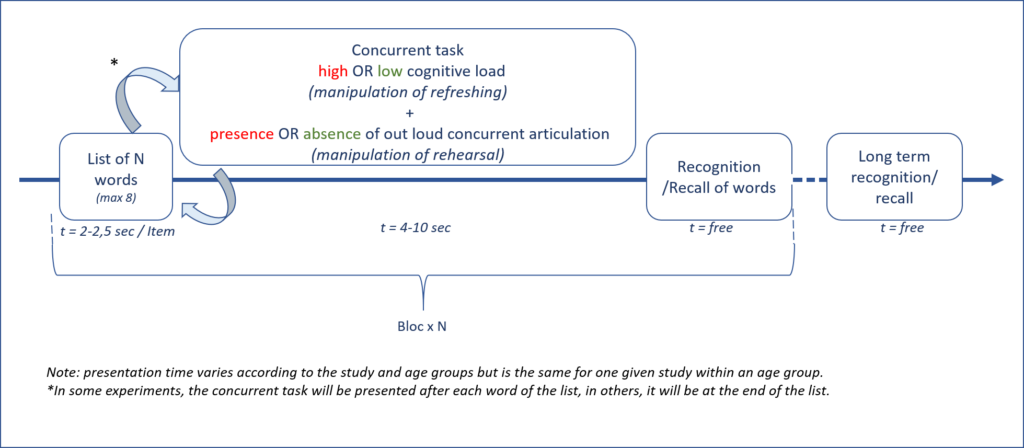
Figure 1. General diagram of the experimental procedure
We will make sure that none of the tasks performed by the children create a feeling of failure. Each study will last between 20 and 30 minutes in average. This includes a set up time, a practice time and a time for the activity itself. All responses will be recorded by the experimenter on a laboratory computer. Data will be anonymized. To thank them, children will receive a “Little Scientist” diploma at the end of the activity.
Application
In the long run, this project will enrich our knowledge about learning in children and could allow the development of new teaching methods. These methods could therefore be specifically adapted to the way children of different ages learn, which in turn depend on the WM maintenance mechanisms they use and on the development of their semantic LTM.